
This and That (#3)
Writing questions, global economics, and Harriet, the Spy

I’ve been busy writing elsewhere, but I miss this little corner of the internet where we can chit-chat, so here’s another round of This and That.
Blogging
Welcome to March, the great Teaser Month! Just today it’s gone from lovely sun to lots of rain at least 3 times - I wouldn’t mind it so much had this winter not been the doomiest, gloomiest winter on record since last winter which also broke records for doom and gloom, aka No Sunshine Ever.
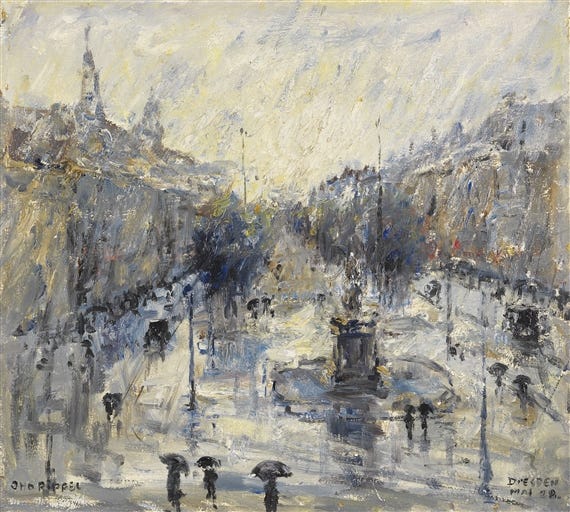
To quote Hopinks: “Enough! the Resurrection / A heart’s-clarion!”
I realized I haven’t posted anything on this personal substack since January, when I wrote about Some Things that Helped my Writing (and Life) in 2025. Well, it turns out that those things are still helping me, alongside one that I forgot to include: printing pages to edit. I wrote more about that in this note, but the short version is that working with words on an actual page helps me quite a bit, particularly in the editing stage.
How do you write?
I’ve spent years gathering information about people’s writing processes. Is anyone else as interested as I am in this sort of thing? I’d love to hear more about how you write: what does it look like? Do you sit down at the keyboard, stretch your fingers, and tip-tap away, Joe Fox style?
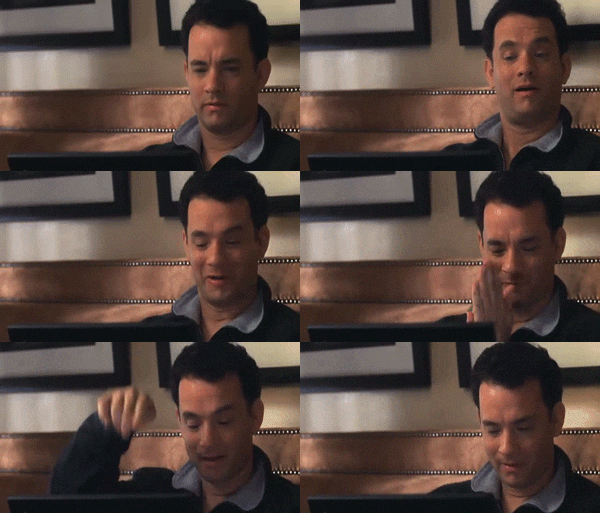
Do you have notebooks in which you scribble furiously at odd moments throughout the day? Do you organize your research in giant Google docs? With color-coded sticky notes? Or does it all live in the steel trap of your mind? Do you write in the still dark hours of the morning? Do you come alive after everyone goes to bed? Do you read your drafts aloud to one lucky soul, or is the first pass only heard by your plants? Are you wed to 1000 words a day or do you let the muse move when she wills? Do you stop just when it’s getting interesting or do you finish the thought?
Inquiring minds want to know!
Browsing
“I make good money. Why do I still feel like this?”
This article articulated a lot of the things that I and friends who grew up in ‘80s and ‘90s America have been feeling. It’s a rare that an article on finance makes me feel seen, but this one sure did.
“But a lot of people — and I think this includes much of this newsletter’s audience — have money. They just aren’t affording the life they thought they would have by now.
…
They have expectations of what their life is supposed to look like — because they watched their parents live it. … You did the work, you got the life. Now you do the work and life keeps receding.
…
So, if you’re on the labor side of the economy — earning a paycheck, no matter how large — you’re playing a different game than someone whose wealth generates its own returns.
…
If you’re in positional precarity, the work is harder to see because it’s quite psychological: separating what you need from what you were trained to expect.”
What we were trained to expect were not expensive cars or Gucci handbags or giant plasma TVs, because those things just didn’t really exist for most of us, outside of futuristic movies or for really rich people who lived in Hollywood. What we were trained to expect was that working hard would enable a stable life: a 4 bed house in the suburbs on an affordable mortgage, a working car, maybe not-too-expensive Catholic school tuition, possibly a modest family vacation, all paid for by a 9-5 job with an hour lunch break and no real commute. As we grew up, we also thought that a single gal could make her way into a fabulous job in journalism that would pay the bills on a NYC apartment. Gone are those days, for sure.
But I also have friends who grew up in very, very different worlds (like under communism) and whenever I speak with them, I’m always struck by how what people consider ‘normal’ or ‘expected’ can vary so widely.
Lately I’m finding myself in conversations about AI (growing) and the job market (tanking) and the stock market (also tanking) and the housing market (about to be tanking), and honestly I just find myself more and more inclined to embrace the life of a hermit. (With an affordable mortgage, not a cave :))
I’m curious: do those conversations ever inspire practical change in anyone? If you have a story of how a conversation about global economic markets has actually changed something in your life, I’d be so curious to hear about it.
Star Trek: Strange New Worlds
This was the first modern TV show I’ve seen in a while that was just good TV. It wasn’t trying to be a film, it wasn’t trying to be overly artistic, and it wasn’t (for the most part) trying to be political or woke. By the end of season one, I cared about most of the characters, and I was invested in a storyline that wrestled with the age-old question that plagued Oedipus Rex: if you know the future, are you fated to live it?
I think the sci-fi genre allows for exploration of moral and existential themes in a way that doesn’t always work well in other genres. If you change the rules of the universe, do the same things still matter? One of the later episodes is pretty much a straight up rip-off of Shirley Jackson’s The Lottery: to what lengths will we go to ensure a flourishing community?
Some seasons were better than others, some plot lines and episodes fell flat, but overall, it was fun TV that I’d watch with older teens (and a bit of fast-forwarding). It would make for good conversations about human nature, morality, friendship, and the nature of knowledge. (I realize that perhaps this makes it sound boring - it wasn’t!)
Have you watched any good TV lately?
Booklegging
I’m still slowly making my way through the Dear Genius: The Letters of Ursula Nordstrom, and it inspired me to order a copy of Harriet, the Spy, which I haven’t read since childhood.
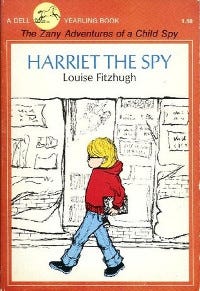
Talk about a trip. I remember really enjoying the book but revisiting it as an adult makes me question how much perspectives can change or perhaps time can warp memory? I found Harriet to be thoroughly disagreeable, and the one adult whom I had remembered as a comforting figure failed to come across as such, this time around.
One thing that I did wonder was whether Fitzhugh was trying to suggest that Harriet was on the autism spectrum at all? She loves repetition and hates change (eating the same tomato sandwich every day!); is unflinchingly honest; and is not always attuned to social cues. In that light, she becomes a much more sympathetic character, at least to me. What do you think?
Nordstrom, children’s book editor at Harper for many decades, loved the book (as she did many controversial works) but its reception by adults was less than enthusiastic at the time.
If you read it as a child or as an adult, I’d really love to hear your thoughts.
That’s it from me for now - tell me, what’s your writing process? Can conversations about global economic markets enable practical change? Have you seen any good TV lately? Do you have strong opinions about Harriet, the Spy?
Somehow I missed this blog from you! glad to follow you here. Anyway, I think "Harriet the Spy" falls into two distinct categories of children's books for me. The first is books about smart girls written in the early 60s that my mom (who was very smart) found affinity with and then passionately passed them on to me. A lot of these books are fun (Freaky Friday; Mixed Up Files) but some (Harriet) are not really that good, except if you think about the landscape of the 1960s and how few smart women role models young girls had. The second category I haven't found a good name for yet, but it's the ephemera books of childhood. The ones that are fine, but not great (the way Little Women is great, for example), but they passed the time and anyway I read several books a week so not every one of them could be great. I try to tell my friends with chapter-book-reading kids to not worry too much about what they're reading (yes, have standards, but don't worry!) because honestly they are just reading voraciously right now and will come back to the ones that are really good. (But yes, I think the spectrum point is a good one.) Love the money/life article. (I mean, hated it because It's me! Hi! but really appreciated it!)
I always appreciate hearing your thoughts in these posts. Over the past week I keep picturing that Joe Fox gif whenever I sit down to type.
I’m usually scribbling notes in a notebook, or tapping them into my notes app, then typing during naptime or bedtime. There’s almost always something I want to write, so I make myself do it even if I don’t think it’s going to turn out well. Across these things, I write every day. Recently, I forced myself to write and edit for an hour almost every night because I just wanted to be done with an essay that was hard for me. I don’t usually work in this kind of disciplined manner, but I told the good people of Substack and myself that it was the next thing I would post, so I was trapped haha.
I’m working on writing with my eldest now and feel very humbled. Did I have a hard time putting words on paper when I was that age? I actually think not. But now I’m trying to look at the rules and teach according to a method. I don’t usually think about these when I’m writing, I just ask whether it’s cohesive and good, like you know when a soup is done by the taste. I don’t know. I’m also convinced that a voracious reader will catch on to writing very quickly, but perhaps I will have to change my mind.
What’s your experience with readers becoming writers?